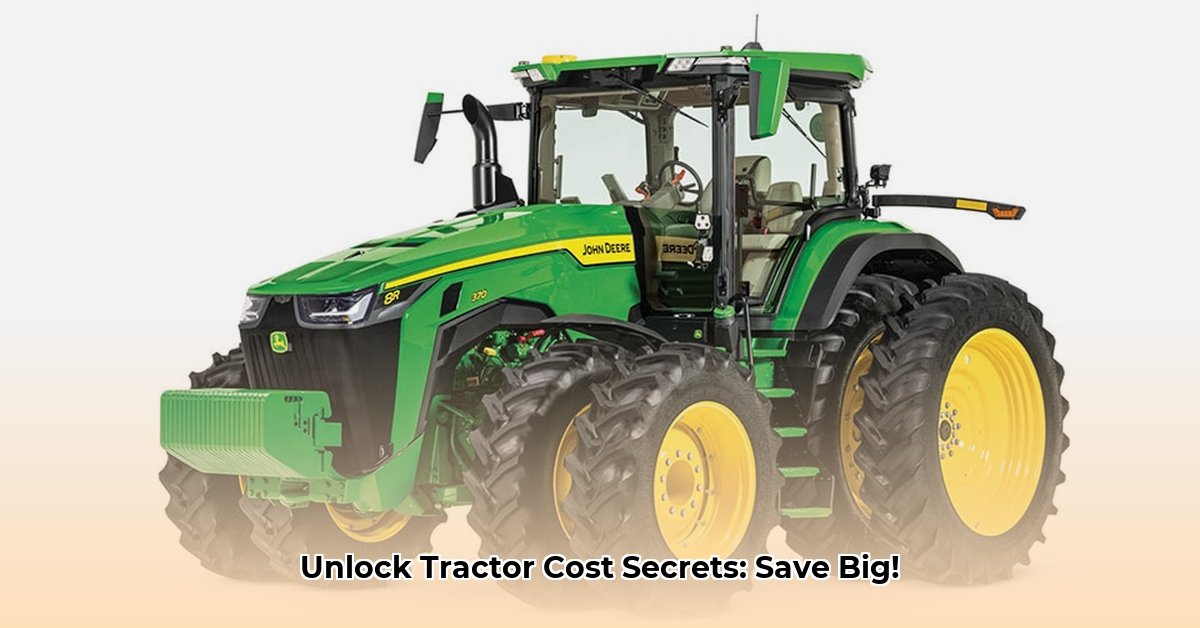
Choosing the right tractor is a pivotal decision for sustainable agriculture, impacting both profitability and environmental responsibility. The initial cost varies dramatically, from a few thousand dollars for a used compact model to hundreds of thousands for a large, high-horsepower machine. This comprehensive guide navigates the complexities of tractor costs, empowering you to make informed choices that align with your farm's needs and sustainability goals. Do you know the true total cost of ownership (TCO) of your next tractor? For more detailed pricing information, check out this helpful resource on tractor costs.
Understanding Tractor Types and Costs
Tractor costs depend heavily on type, size, and features. The initial purchase price is only the beginning; ongoing maintenance, fuel consumption, and potential resale value significantly impact the overall expense. To get a clearer idea, let's analyze the different types.
| Tractor Type | Horsepower Range | Approximate Price Range (USD) | Best Uses | Considerations |
|---|---|---|---|---|
| Compact | 20-40 HP | $10,000 - $40,000 | Small farms, hobby farms, landscaping, light-duty tasks | Ideal for smaller operations, limited acreage; may require upgrades for heavier tasks |
| Mid-Size | 40-100 HP | $25,000 - $100,000 | General farming, hay baling, tillage, small livestock | Versatile for various tasks; good balance between power and affordability |
| Large | 100-200+ HP | $75,000 - $300,000+ | Large-scale farming, heavy tillage, large livestock | High power and efficiency; significant investment; suitable for extensive acreage |
| Tracked/Crawler | Varies | $100,000 - $600,000+ | Steep slopes, wet conditions, heavy-duty applications | Specialized use; superior traction in challenging terrains; substantial investment |
Remember, this is just the base tractor. Attachments (plows, harrows, etc.) significantly increase the overall cost. A simple plow might cost a few hundred dollars; specialized implements can cost thousands. Isn't understanding these potential add-on costs crucial to budgeting effectively?
Assessing Your Needs: Tailoring Your Tractor Purchase
Before focusing on price, determine your farm's needs. This will prevent overspending on unnecessary features or under-powering your farming operations. Here's a step-by-step approach:
- Analyze Your Farm: Consider acreage, soil type, current and projected crops, typical tasks (planting, harvesting, tillage), and future expansion plans.
- Determine Tractor Size and Features: Based on your farm analysis, match horsepower, implement capacity, and essential features (e.g., four-wheel drive) to your workload. Overestimating needs adds unnecessary cost, while underestimating can limit productivity.
- Prioritize Sustainability: Consider the tractor's fuel efficiency, emissions, and overall environmental impact on soil health. Are you maximizing long-term sustainability with your choice?
New vs. Used Tractors: A Cost-Benefit Analysis
Deciding between a new or used tractor greatly impacts your budget. Both have significant pros and cons:
New Tractors:
- Pros: Reliability, warranty, better fuel efficiency, lower emissions, modern technology.
- Cons: High initial cost, rapid depreciation.
Used Tractors:
- Pros: Lower initial cost, already depreciated.
- Cons: Unknown maintenance history, potential for unexpected repairs, possibly lower fuel efficiency, higher emissions.
Thoroughly inspect used tractors, preferably with a qualified mechanic, to avoid costly surprises. Do you understand the trade-offs between upfront cost and long-term maintenance?
Financing Options: Securing the Funds
Financing is often crucial for tractor purchases. Explore these options:
- Dealer Financing: Convenient, but potentially higher interest rates.
- Bank Loans: Possibly lower interest rates, but require a credit check and more paperwork.
- Government Grants/Subsidies: Research available programs supporting sustainable agriculture.
- Leasing: Avoids a large down payment, but you won't own the tractor after the lease term.
Compare interest rates, repayment terms, and eligibility criteria before making a decision. Have you considered all available financing options to minimize your financial burden?
Sustainability Considerations: Environmental Impact
Sustainable farming requires responsible tractor choices. Consider:
- Fuel Efficiency: Lower fuel consumption minimizes operating costs and reduces your carbon footprint.
- Emissions: Opt for tractors with lower greenhouse gas (GHG) emissions.
- Soil Health: Tractor weight and tire pressure affect soil compaction; consider these factors to minimize negative impacts on soil structure and biodiversity. The choice of fuel also plays a crucial role. Biodiesel, for example, can reduce emissions compared to conventional diesel, contributing to a more sustainable agricultural practice.
Calculating Total Cost of Ownership (TCO)
The TCO extends beyond the sticker price. Consider:
- Purchase Price
- Maintenance (repairs, parts, labor)
- Fuel Costs
- Insurance
- Resale Value (offsets some costs)
A comprehensive TCO analysis ensures a fiscally responsible decision. Are you fully accounting for all costs involved over the tractor's lifespan?
Actionable Steps & Checklist
- Assess your farm's needs.
- Research tractor types and costs. (Utilize online resources and consult with agricultural equipment dealers.)
- Compare new and used options.
- Explore financing options.
- Calculate TCO.
- Prioritize sustainability.
Selecting the right tractor requires careful planning. This guide empowers you to make an informed decision, balancing immediate costs with long-term sustainability and profitability. Remember, the agricultural technology landscape is ever-evolving; continuous learning ensures optimal choices for your farm's future.